It is not garden furniture
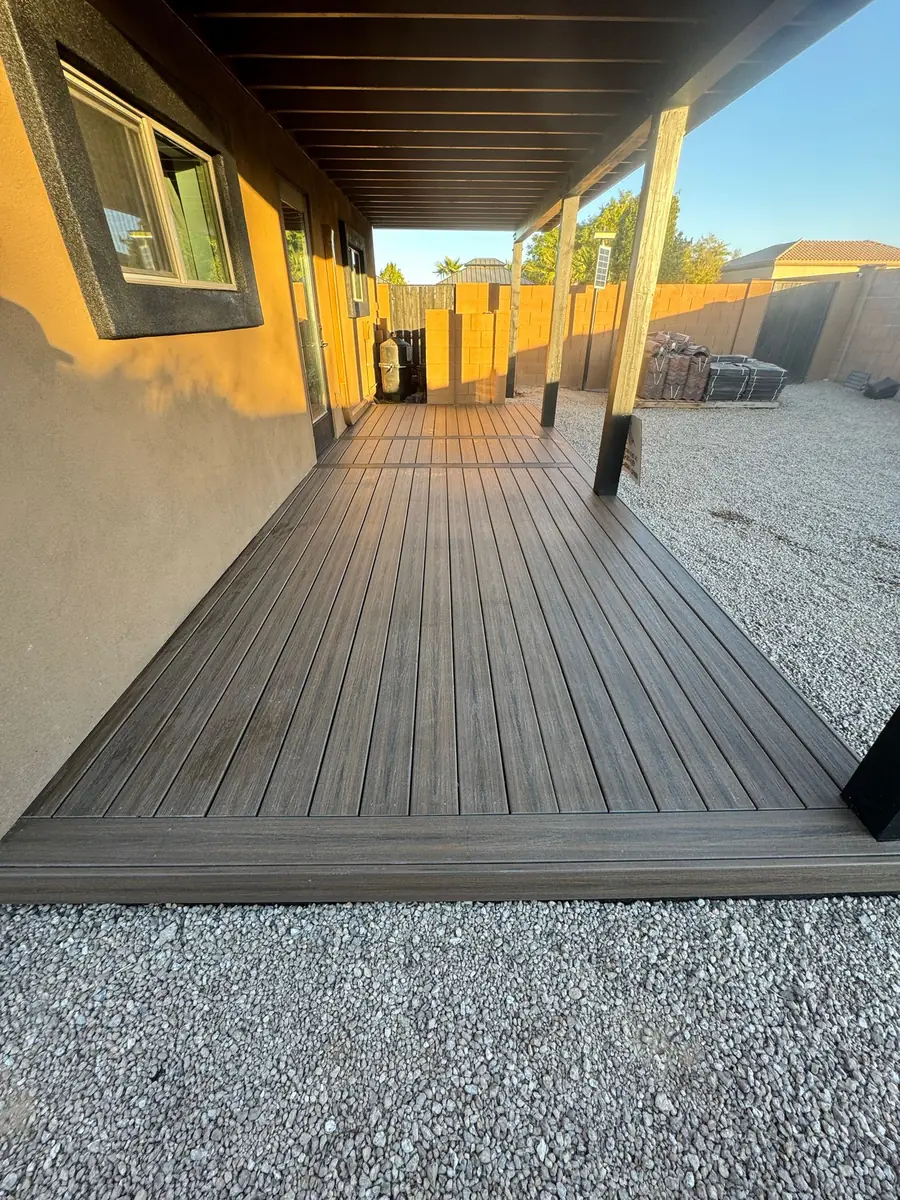
A pergola in this climate is a piece of building services as much as a piece of landscaping. Put one over a west-facing patio and two things happen: the patio becomes usable for five months of the year it was not, and the wall and glass behind it stop taking direct afternoon sun. The second effect is the one people do not expect and the one that shows up on a utility bill.
That is the honest argument for building one, and it is a better argument than the pictures. A patio that is too hot to stand on at four in the afternoon is not a feature of the house, and no amount of furniture fixes it.
Three kinds, and the third is the difficult one
An open-rafter pergola gives filtered light and the look of one. Rafters on a beam, gaps between them, shadow that moves across the day. It reduces glare and takes the edge off, and it does not give you anywhere dry to sit.
A solid-roof ramada or patio cover gives real shade and a roof. It is a building, it wants a proper roof structure and a way for water to leave, and it is what most people actually mean when they ask for a pergola.
The third is a cover attached to the house, and it is the hardest of the three by some distance. Everything hangs on the junction where the new roof meets the existing one. Done properly it is flashed and lapped into the existing roof covering. Done in a hurry it is a bead of sealant, and a bead of sealant in Arizona sun has a service life measured in a couple of summers.
It starts underground
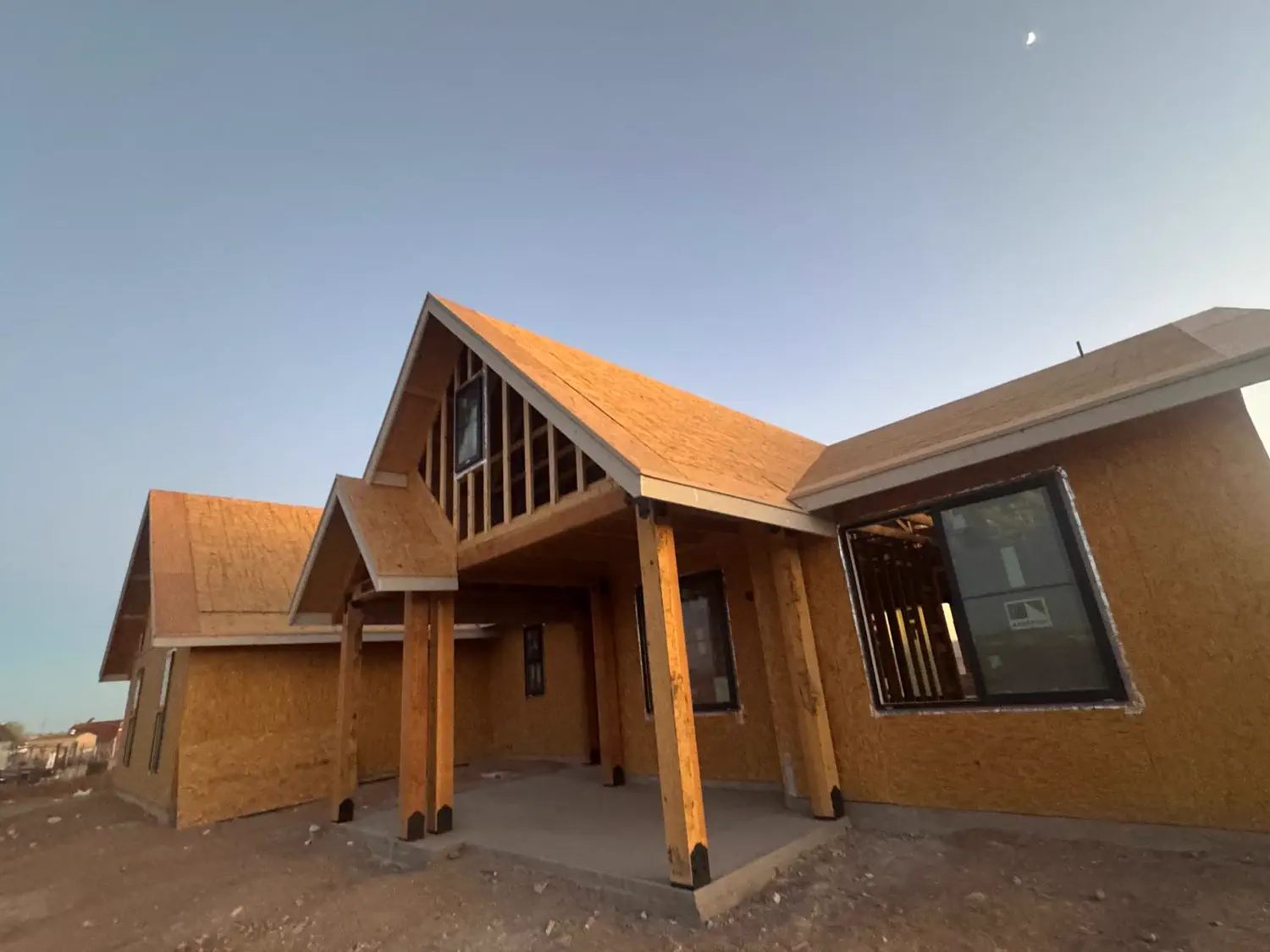
The part of a shade structure that decides whether it is still standing in twenty years is the part nobody looks at. Posts land on footings sized for the span above them and for uplift, and they sit on standoff bases that hold the timber clear of the concrete so it cannot wick water and rot from the bottom up.
Uplift is the load that catches people out. A monsoon gust does not push a flat roof on posts downwards, it lifts it — a patio cover is a wing. So the connections that matter most are the ones holding the structure down: ties at every rafter, hold-downs at the posts, and a footing with enough mass to argue with the wind.
- Footings sized for the span and for uplift, not to a rule of thumb
- Standoff post bases, so no timber sits in concrete
- Beams and rafters sized to the span they actually cross
- Ties and hold-downs at every post and beam connection
- Flashed into the roof where it attaches, not caulked onto it
Most jurisdictions want a permit
Anything with a footing and a roof is generally a permitted structure across the valley, and attaching it to the house makes it one almost everywhere. Where a community has an architectural committee, the design goes to them as well, and the two submissions are worth making in parallel rather than one after the other.
It is worth doing properly for a reason that has nothing to do with rules. An unpermitted structure attached to the house is a problem on the day the house is sold, and it is a much more expensive problem then than it was at the start.
If the patio is unusable from May, the answer is shade, and the answer is shade before it is furniture, misters or a bigger air conditioner.
Questions we get asked
Do I need a permit for a pergola in Arizona?
Generally yes. Anything with a footing and a roof is a permitted structure across most of the valley, and attaching it to the house makes it one almost everywhere. Where a community has an architectural committee that is a second, separate consent. We pull the permit: an unpermitted structure attached to the house is a problem on the day it is sold, and a more expensive one then.
What is the difference between a pergola and a ramada?
A pergola has open rafters and gives filtered light. A ramada or patio cover has a solid roof, so it gives real shade and somewhere dry to sit out a storm. Most people who ask us for a pergola describe a ramada when we ask what they want to do under it.
How much shade does an open pergola actually give?
Enough to cut the glare and take the edge off, and not enough on its own to make a west-facing patio usable in July. If the aim is a room you will actually sit in through the summer, the solid roof is the honest answer.
Will a patio cover blow off in a monsoon?
Only if its connections were built for weight rather than uplift. A flat roof on posts is a wing, and a gust lifts it rather than pressing it down. Footings sized for uplift, hold-downs at the posts and ties at every rafter are what keep it where it was put.