Before approving a reroof, ask what happens where the roof meets a stucco wall. New roofing does not show whether the wall-side flashing is sound or connected to the layers that shed water behind the stucco. The proposal should say what will be exposed, replaced or reused, and who will restore the wall finish.
Follow the water at the wall
At a sloped roof that meets a wall, flashing has to guide water down the roof and out from the wall. At the lower end of that junction, a kick-out diverter can direct runoff toward a gutter instead of letting it track down the wall. The U.S. Department of Energy’s Building America Solution Center guide for existing homes explains why the roof flashing, underlayment and wall’s water-resistive barrier need to work together during a reroof.
Stucco makes the connection hard to judge from the ground because the flashing’s wall leg may sit behind the finish. The APA’s typical stucco wall-to-roof detail shows base and counter flashing integrated with the wall layers. It is a reference detail, not a substitute for the design and product instructions for a particular roof.
Put the flashing work in the written scope
Ask the roofer to identify each roof-to-wall joint in the proposal or job photos before the price is final. For each one, get clear answers to these questions:
- Will existing flashing stay, or will the work expose and replace it? If it stays, how will its condition be checked once the roof covering is removed?
- If stucco or another wall layer must be opened, who handles that work and the finish repair?
- At the low end of each wall run, how will the flashing direct water away from the wall and into the drainage path?
- Which roof system is being installed, and which manufacturer instructions and local requirements govern its flashing detail?
The exact answer depends on the roof covering and the wall assembly. Asphalt shingles and concrete or clay tile do not share one universal flashing detail. IKO’s shingle flashing guide, for example, describes sequencing step flashing with shingles and sending water into a kick-out at the wall’s lower end. Follow the instructions for the actual roofing product and confirm the rules for the property’s jurisdiction.
Agree on the handoff before it is covered
A reroof can involve both roofing and stucco repair. If different trades handle those parts, name who connects the flashing to the wall’s water-control layers and who returns to close and finish the stucco. That keeps the critical joint from falling between two scopes.
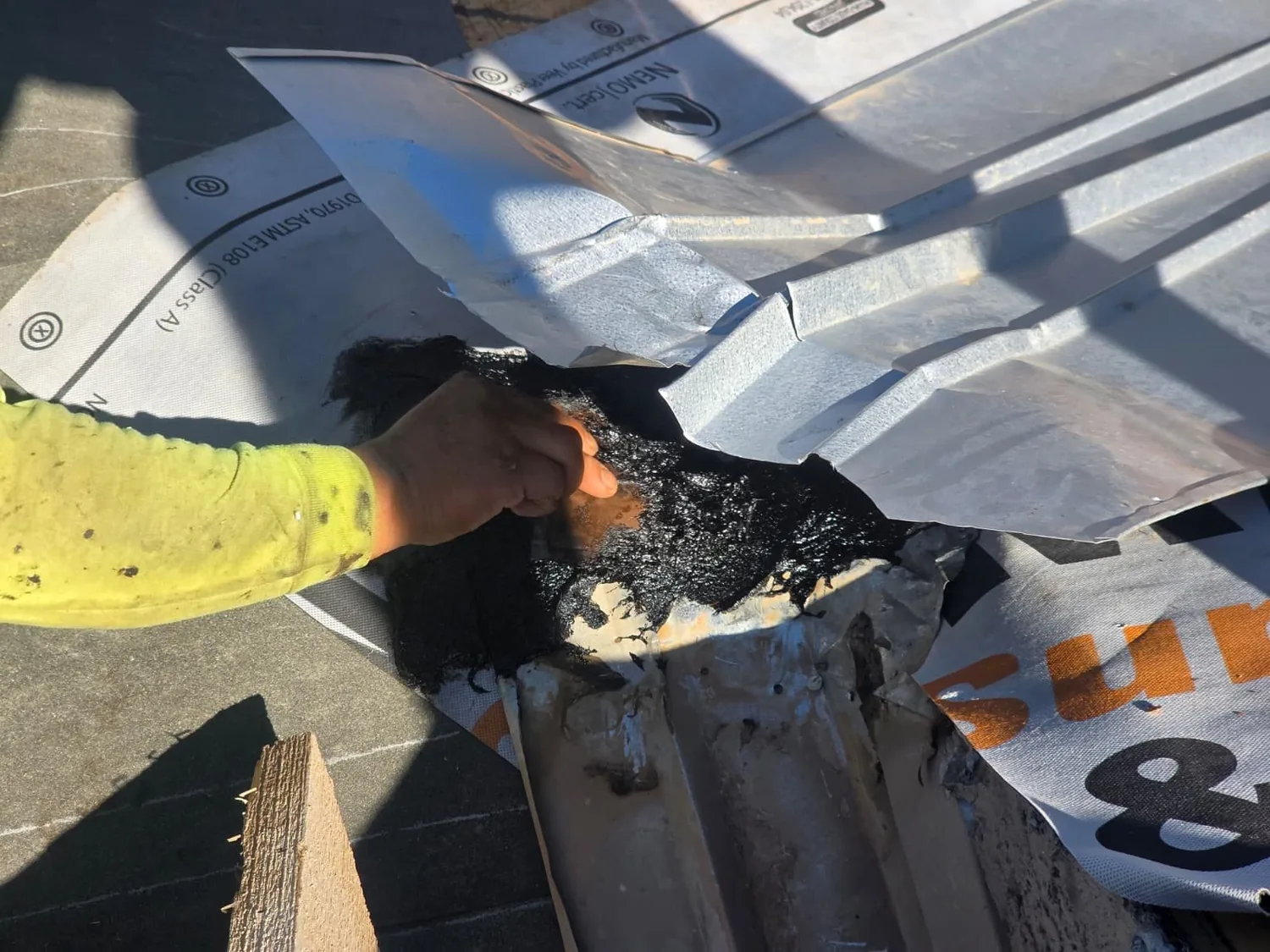
Ask for photos of the exposed joint before it is covered, along with a note of any damage or excluded repair. A neat bead of sealant at the visible edge cannot show how hidden layers overlap. IKO also cautions that caulk is not a replacement for flashing. Treat sealant as a specified part of a detail, not as proof that the water path is complete.
Compare proposals by the joint, not just the roof
Two reroof estimates are easier to compare when each states what happens to wall flashing, underlayment, damaged materials, stucco opening and finish repair. Quest’s roofing service lists tile, underlayment and flashing among the items to check before pricing. For more on a tiled roof assembly, read what sits beneath the roof tile; for shingle overlays, see what an overlay can leave hidden.
Before you sign, make sure the quote says how the roof-to-wall joint will be opened, tied back together and finished. That is where the new roof meets the older wall assembly.